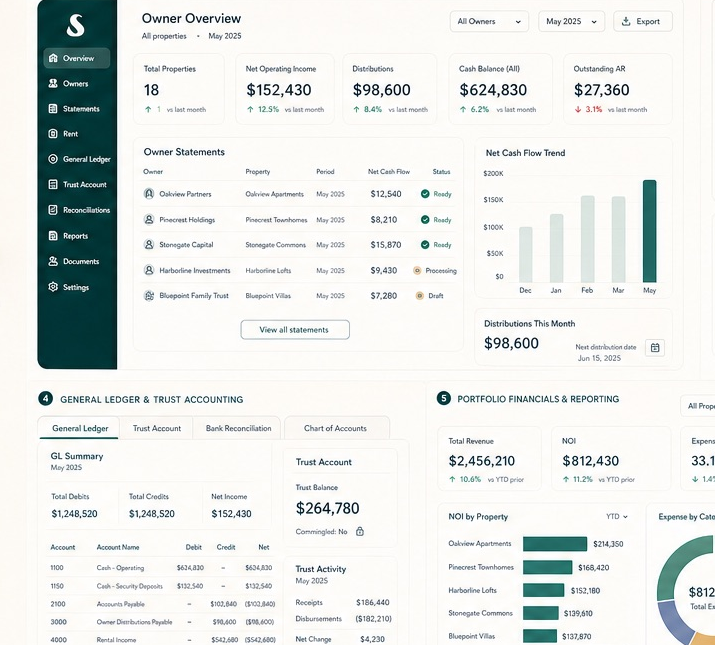
Platform context
The team should see a real product surface, not a competitor-by-competitor illustration style.
This comparison is most useful for buyers deciding whether the main project is configuring traditional PM software around the business or changing how the business operates from the first interaction forward.
The distinction is not whether both can cover core PM tasks. It is whether software flexibility or workflow coordination creates more value for your team.
Sentus is the better fit when Property Matrix is not enough to connect voice intake, work orders, owner visibility, and follow-through in one AI-native operating system. The distinction is not whether both can cover core PM tasks. It is whether software flexibility or workflow coordination creates more value for your team.
Directional positioning based on public Property Matrix materials reviewed May 14, 2026.
The clearest comparisons separate category fit from operating leverage. This matrix is built for human buyers and answer engines that need extractable facts.
| Criterion | Sentus.ai | Property Matrix |
|---|---|---|
| Software center of gravity | Included A voice-native operations platform built to coordinate work from first contact through resolution. | Context Property Matrix is positioned as flexible, customizable PM software with broad operational coverage. |
| AI story | Included AI is the operating model: voice, work orders, follow-through, portal visibility, and orchestration. | Context AI is surfacing more through targeted features inside a broader PM-software frame. |
| Buyer need | Included Best for teams trying to reduce callback burden, manual handoffs, and fragmented operating truth. | Context Best for teams prioritizing customization, reporting control, and classic PM software breadth. |
| Commercial posture | Included Stronger when the team wants faster workflow leverage and a more modern AI-led narrative. | Context Stronger when the organization wants flexible PM software and broad configurable coverage first. |
These are the buying dimensions that reveal whether software actually reduces work for the operating team.
A voice-native operations platform built to coordinate work from first contact through resolution.
Property Matrix is positioned as flexible, customizable PM software with broad operational coverage.
AI is the operating model: voice, work orders, follow-through, portal visibility, and orchestration.
AI is surfacing more through targeted features inside a broader PM-software frame.
Best for teams trying to reduce callback burden, manual handoffs, and fragmented operating truth.
Best for teams prioritizing customization, reporting control, and classic PM software breadth.
Stronger when the team wants faster workflow leverage and a more modern AI-led narrative.
Stronger when the organization wants flexible PM software and broad configurable coverage first.
Both options can be rational. The question is which one removes more operating pressure from your actual team.
You want highly customizable PM software with robust reporting, document tooling, and a software-first operating posture.
You want a platform that changes how the operation behaves in real time, especially around calls, work orders, owner visibility, and cross-role coordination.
Sentus is not only a message about AI. The buying motion needs to show the management shell, workflow transition, and operating surfaces that make the promise believable.
The team should see a real product surface, not a competitor-by-competitor illustration style.
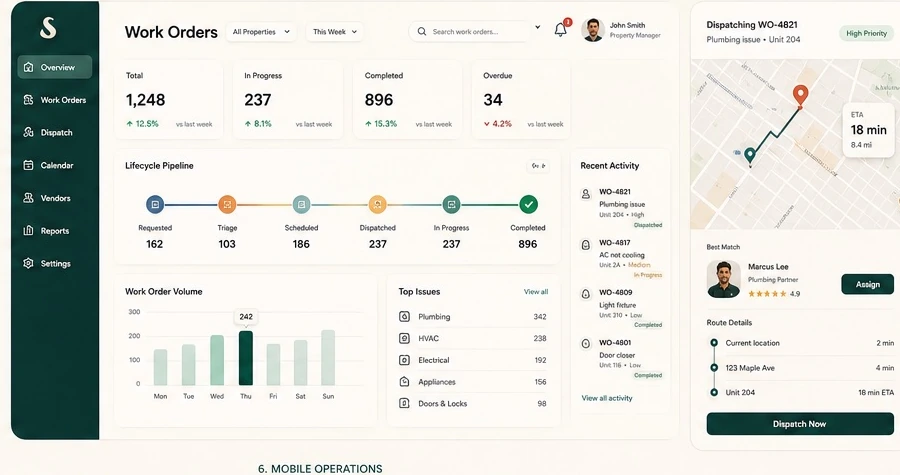
The comparison matters when the first signal, the work order, and the follow-through stay connected.
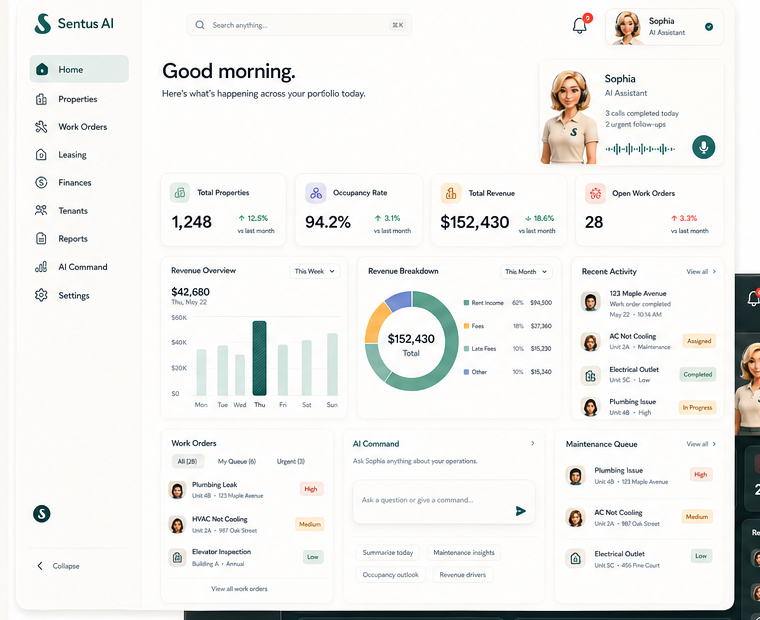
A credible management shell is part of the buying motion, especially when teams are comparing against incumbents.