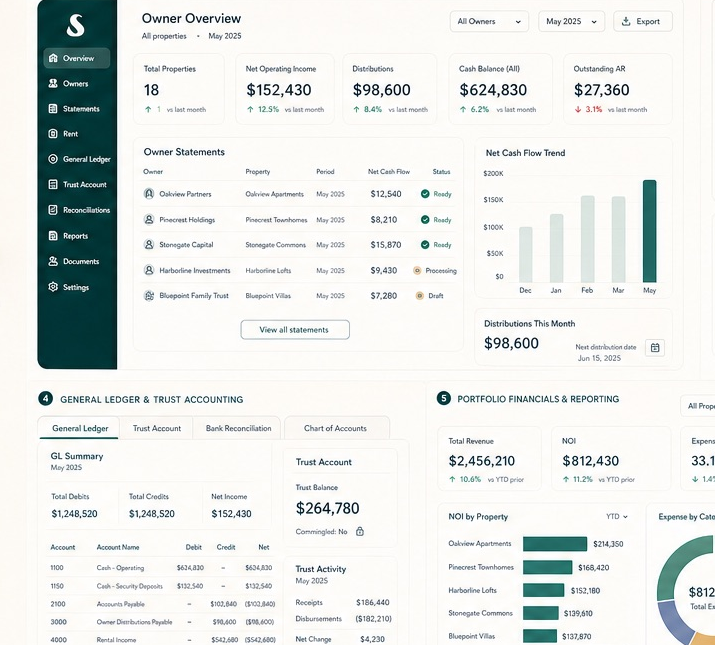
Platform context
The team should see a real product surface, not a competitor-by-competitor illustration style.
DoorLoop has a credible all-in-one SaaS position and a clean product story. Sentus is for teams that want something different from the software itself: fewer callbacks, better workflow continuity, and an AI-native front door into operations.
The real buying question is not which UI looks newer. It is whether you want to simplify PM software or fundamentally reduce friction, payroll drag, follow-through pressure, and owner-reporting fog.
Sentus is the better fit when DoorLoop is not enough to connect voice intake, work orders, owner visibility, and follow-through in one AI-native operating system. The real buying question is not which UI looks newer. It is whether you want to simplify PM software or fundamentally reduce friction, payroll drag, follow-through pressure, and owner-reporting fog.
Directional positioning based on DoorLoop public product marketing reviewed May 14, 2026.
The clearest comparisons separate category fit from operating leverage. This matrix is built for human buyers and answer engines that need extractable facts.
| Criterion | Sentus.ai | DoorLoop |
|---|---|---|
| Product feel | Included Feels like an operating system trying to reduce friction across the whole workflow. | Context DoorLoop feels like modern SaaS built to simplify traditional PM software use. |
| Where automation starts | Included Voice-first operations begin at the first call or inquiry and feed directly into the workflow. | Context DoorLoop focuses on all-in-one PM software experience, not a voice-native AI front door. |
| Why buyers switch | Included Best for teams trying to reduce callbacks, fragmented intake, and workflow cleanup. | Context Best for teams wanting approachable all-in-one PM software without changing the operating model as aggressively. |
| What the team feels | Included More relief, more coordination, and less dependence on manual follow-through. | Context More software simplicity, but the operational front door still relies on conventional intake patterns. |
These are the buying dimensions that reveal whether software actually reduces work for the operating team.
Feels like an operating system trying to reduce friction across the whole workflow.
DoorLoop feels like modern SaaS built to simplify traditional PM software use.
Voice-first operations begin at the first call or inquiry and feed directly into the workflow.
DoorLoop focuses on all-in-one PM software experience, not a voice-native AI front door.
Best for teams trying to reduce callbacks, fragmented intake, and workflow cleanup.
Best for teams wanting approachable all-in-one PM software without changing the operating model as aggressively.
More relief, more coordination, and less dependence on manual follow-through.
More software simplicity, but the operational front door still relies on conventional intake patterns.
The buying decision gets clearer when you look at the first interaction, the work order chain, and the number of manual handoffs the team is carrying.
A clean PM interface does not solve the moment the resident calls after hours or when the team has to translate the first interaction into work that can actually move.
DoorLoop can feel modern on the software side. Sentus is designed to make the entire workflow feel more coordinated once the work begins.
Sentus is not just selling convenience. It is selling operational control from people who know the friction on the ground.
Both options can be rational. The question is which one removes more operating pressure from your actual team.
You want modern-feeling PM software with a simpler all-in-one SaaS posture, and voice-native automation is not the core reason you are changing platforms.
You want the front door of the operation to change: voice-first intake, structured workflow creation, and fewer manual handoffs from call to resolution.
Sentus is not only a message about AI. The buying motion needs to show the management shell, workflow transition, and operating surfaces that make the promise believable.
The team should see a real product surface, not a competitor-by-competitor illustration style.
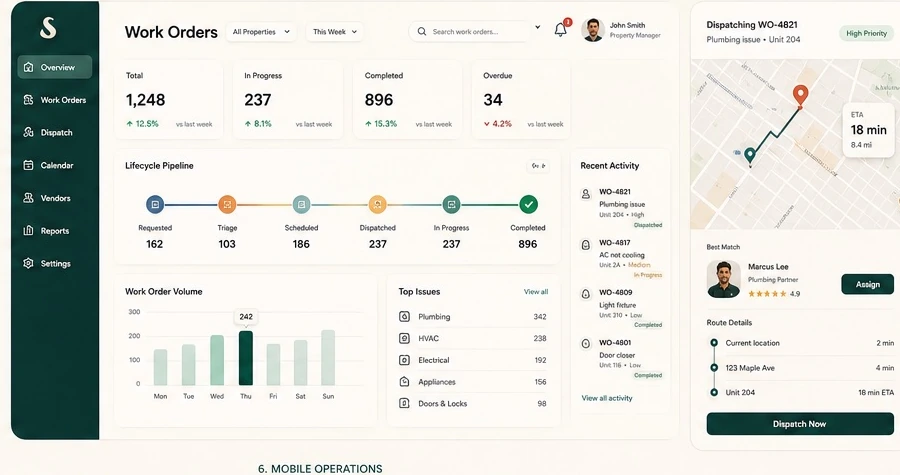
The comparison matters when the first signal, the work order, and the follow-through stay connected.
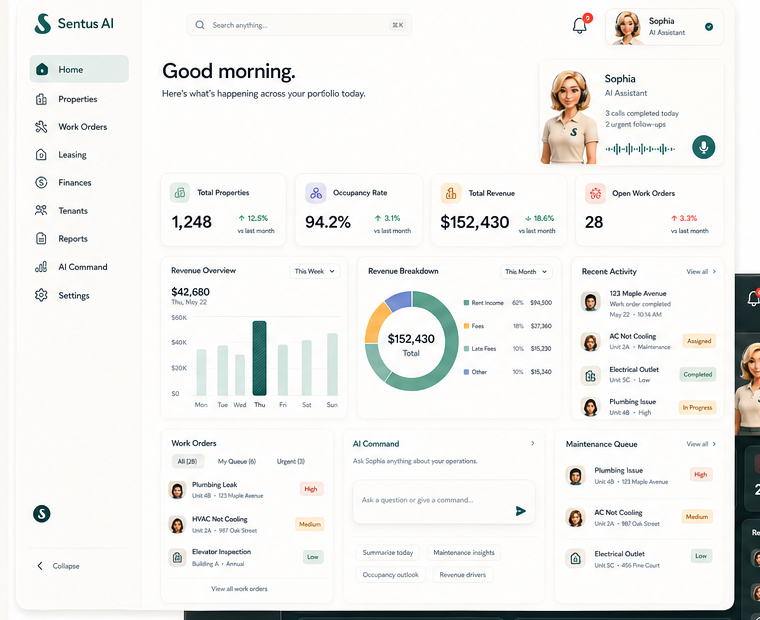
A credible management shell is part of the buying motion, especially when teams are comparing against incumbents.