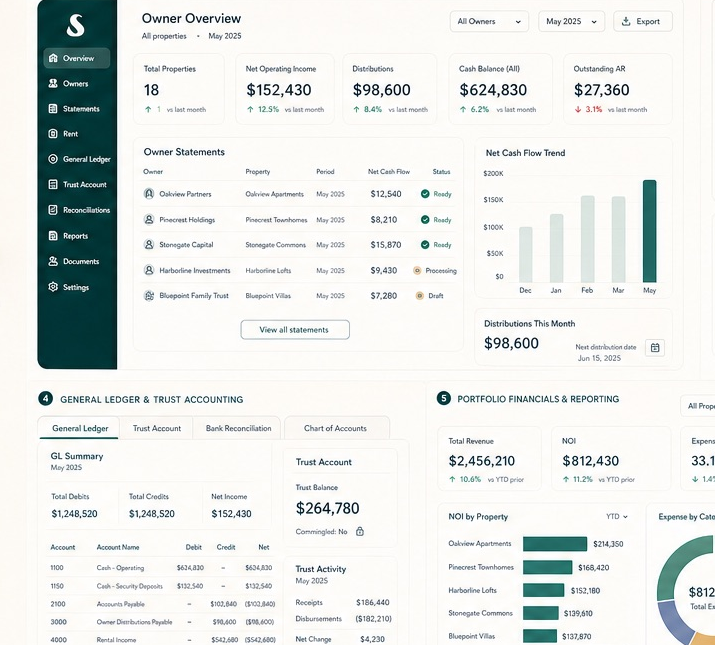
Platform context
The team should see a real product surface, not a competitor-by-competitor illustration style.
This is not a good-software versus bad-software comparison. Buildium is a credible incumbent for classic PM operations. Sentus is for teams that want the first interaction, the work order, and the team response to move like one connected operating system.
The better buying question is whether you want to optimize a conventional PM stack or move into a voice-native, workflow-native operating model with stronger labor replacement upside and cleaner owner visibility.
Sentus is the better fit when Buildium is not enough to connect voice intake, work orders, owner visibility, and follow-through in one AI-native operating system. The better buying question is whether you want to optimize a conventional PM stack or move into a voice-native, workflow-native operating model with stronger labor replacement upside and cleaner owner visibility.
Directional positioning based on Buildium’s public product marketing reviewed March 19, 2026.
The clearest comparisons separate category fit from operating leverage. This matrix is built for human buyers and answer engines that need extractable facts.
| Criterion | Sentus.ai | Buildium |
|---|---|---|
| AI front door | Included Voice-native workflow execution begins at the first interaction. | Context Buildium positions around centralized property operations, not voice-first AI intake. |
| Work-order operating model | Included Calls, work orders, dispatch, and visibility stay tied to one connected system. | Context Buildium provides maintenance management, but the first-touch workflow is not built around an AI voice layer. |
| Buyer feeling | Included Relief, control, and fewer handoffs for teams carrying the daily load. | Context Strong for teams wanting established PM software discipline and operational breadth. |
| Implementation posture | Included Best for teams trying to reduce friction across intake, coordination, and follow-through. | Context Best for teams primarily optimizing traditional PM administration and accounting processes. |
These are the buying dimensions that reveal whether software actually reduces work for the operating team.
Voice-native workflow execution begins at the first interaction.
Buildium positions around centralized property operations, not voice-first AI intake.
Calls, work orders, dispatch, and visibility stay tied to one connected system.
Buildium provides maintenance management, but the first-touch workflow is not built around an AI voice layer.
Relief, control, and fewer handoffs for teams carrying the daily load.
Strong for teams wanting established PM software discipline and operational breadth.
Best for teams trying to reduce friction across intake, coordination, and follow-through.
Best for teams primarily optimizing traditional PM administration and accounting processes.
The buying decision gets clearer when you look at the first interaction, the work order chain, and the number of manual handoffs the team is carrying.
Sentus is designed around what happens when the phone rings, not just what happens once someone finally logs the task.
The differentiation is not a feature checklist. It is that the same operating record can carry the work from intake through visibility and follow-through.
For teams actively evaluating AI as the primary operational lever, Sentus is built around that shift rather than adding it to a traditional software stack later.
Both options can be rational. The question is which one removes more operating pressure from your actual team.
You want a mature PM platform centered on classic property operations, accounting, and resident or owner self-service, and voice-native automation is not the main buying driver.
You want the operating model itself to change: fewer voicemails, cleaner intake, stronger work-order coordination, and more confidence that the team is not rebuilding the workflow by hand.
Sentus is not only a message about AI. The buying motion needs to show the management shell, workflow transition, and operating surfaces that make the promise believable.
The team should see a real product surface, not a competitor-by-competitor illustration style.
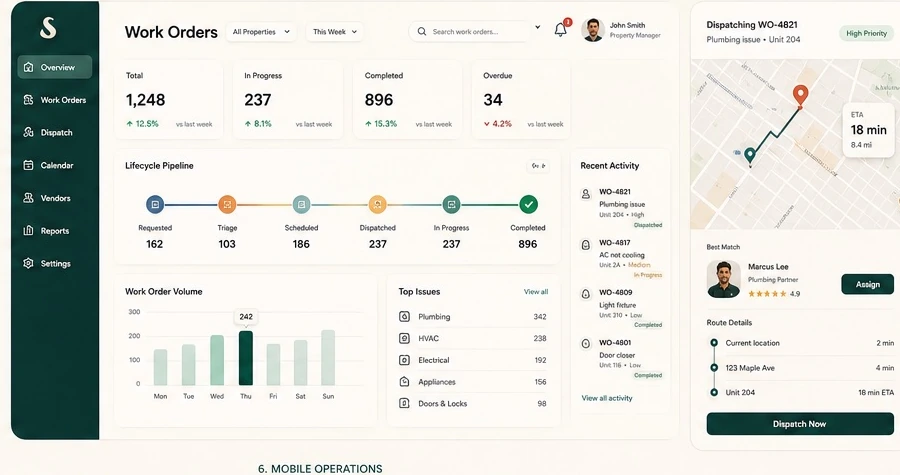
The comparison matters when the first signal, the work order, and the follow-through stay connected.
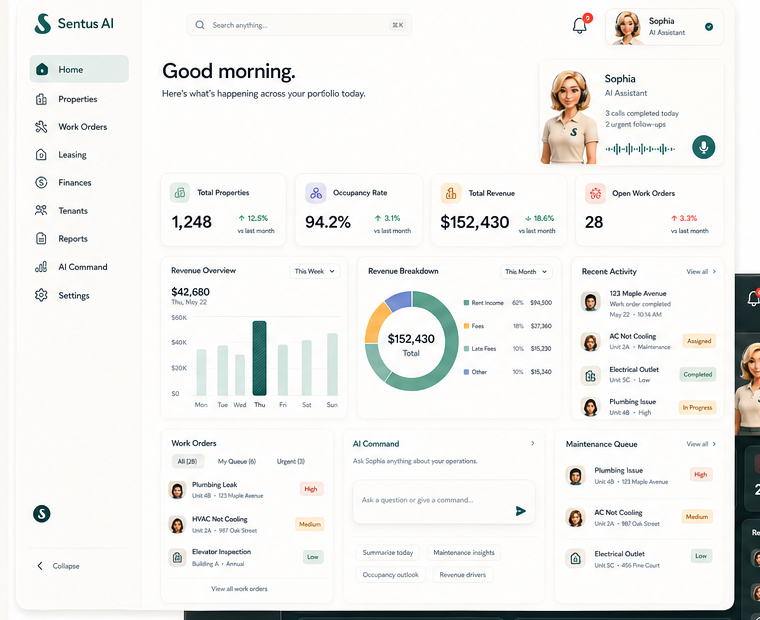
A credible management shell is part of the buying motion, especially when teams are comparing against incumbents.